Replatforming, Rewritten: From Hosted Carts to Shopify Plus Without Losing Traffic or Revenue

In the early years of ecommerce, a store migration was often treated as a technical relocation: products were exported, templates were rebuilt, and a new cart was switched on when the old one was switched off. That assumption began to fail as stores accumulated thousands of indexed URLs, complex product data, paid acquisition systems, customer accounts, analytics dependencies, and a history of search signals that could not be packed neatly into a spreadsheet.
Today, moving from a hosted cart to Shopify Plus is less like changing software and more like moving a living commercial archive. The storefront is only the visible layer. Beneath it sit years of redirects, category logic, customer behavior, campaign tracking, merchandising decisions, and operational workarounds. A migration can improve speed, conversion, and scalability, but it can also erase the conditions that produced existing revenue if the historical record is not understood first.
This is why high velocity migration does not mean rushing the work. It means reducing uncertainty before the launch window, separating reversible decisions from irreversible ones, and treating SEO, conversion, data, and operations as one connected chronology.
Before the Platform: Why Hosted Carts Became So Difficult to Leave
Hosted carts became popular because they removed the need to build and maintain every part of an online shop. In the first phase of direct to consumer commerce, that trade was sensible. A brand could select a theme, upload products, connect payments, and begin trading without assembling a custom commerce stack.
Over time, however, convenience produced layers. A theme acquired custom code. A product catalog developed variants, bundles, subscriptions, and regional exceptions. Marketing teams created landing pages outside the original content model. Agencies added scripts for reviews, recommendations, analytics, loyalty, and advertising. Developers solved immediate problems without always recording the original reason for each solution.
The result was not necessarily a bad website. It was a website shaped by successive eras of business need. Slow templates might reflect an earlier emphasis on visual merchandising. Unusual URLs might preserve campaigns that once ranked well. Manual exports might exist because the previous platform lacked a dependable integration. What appears inefficient in the present may be evidence of a real constraint in the past.
A serious Shopify Plus migration therefore begins with an archaeological question: which parts of the current store are accidental, and which parts are carrying commercial value?
The Search Era: How URLs Became Business Assets
Search engines changed the meaning of a page. A product page stopped being only a sales interface and became an entry point for customers who had never seen the homepage. A buying guide became a long term acquisition channel. A discontinued product page could still attract links, brand searches, and shoppers looking for alternatives.
That history explains why traffic loss during replatforming is often caused by apparently minor omissions. A new store may contain the same products while using different handles, collection paths, pagination, canonical tags, title tags, or internal links. From a merchandising perspective, the catalog has survived. From a search engine perspective, a set of documents has been replaced without an adequate chain of evidence.
Google Search Central's guidance on site moves recommends mapping old URLs to their new equivalents, updating internal links, submitting the new sitemap, and monitoring the move in Search Console. Its guidance on permanent redirects makes the underlying principle clear: a server side 301 or 308 redirect should communicate that a page has moved permanently, rather than leaving visitors and crawlers to infer the relationship.
The practical task is not to redirect every old URL to the homepage. It is to construct a page by page map based on intent. A former product URL should normally point to the same product or its closest successor. A retired collection should point to a relevant surviving collection or editorial destination. Pages with no meaningful successor may need to return a carefully considered 410 status rather than becoming a chain of irrelevant redirects.
This is why the redirect spreadsheet is not administrative debris. It is a historical index of the brand's discoverability.

The Mobile and Performance Shift: Why Replatforming Became a Conversion Decision
As ecommerce moved from desktop browsing to mobile sessions, performance became inseparable from design. A visually rich storefront could no longer be evaluated only by its appearance on a large screen. Its loading sequence, tap targets, product discovery, checkout friction, and behavior under weak connectivity became part of the commercial proposition.
The Baymard Institute's checkout research places the global average cart abandonment rate at approximately 70 percent across its studied benchmarks. That figure does not mean every abandoned cart is recoverable, nor does it isolate platform quality, but it shows why a small increase in friction can have a large financial effect when multiplied across thousands of sessions.
A replatforming project can improve this condition through faster theme architecture, more disciplined app usage, clearer navigation, better product information, and a checkout that removes unnecessary steps. It can also worsen it if legacy features are copied without examining their purpose, if third party scripts are loaded indiscriminately, or if a new design makes product comparison harder on smaller screens.
Performance testing must therefore happen before launch, not only after the new store is public. Templates should be tested across representative product, collection, content, and checkout journeys. Mobile devices, slower connections, analytics consent states, promotional periods, and logged in customer paths should be included. The relevant question is not whether the homepage looks fast in a development environment. It is whether the revenue producing journeys remain usable under ordinary customer conditions.
Shopify's account of website speed and ecommerce performance describes the relationship between storefront speed, user experience, and commercial performance, while Google's Core Web Vitals documentation provides the measurement framework for loading, responsiveness, and visual stability. These measures are not a substitute for user research or conversion analysis, but they establish a useful baseline before the migration changes the evidence.
The Shopify Plus Era: What Changed, and What Did Not
Shopify Plus emerged from a period in which growing brands needed more operational capacity without assuming responsibility for every layer of infrastructure. Its appeal lies in the combination of hosted commerce, a mature app ecosystem, international selling capabilities, automation, and greater support for complex organizations.
The platform does not remove the need for architecture. It changes where architecture is expressed. Instead of maintaining an entire custom cart, the migration team must decide how the brand's requirements fit Shopify's products, APIs, data model, theme system, checkout capabilities, markets, permissions, and integrations.
This distinction matters most at checkout. Shopify's transition from older checkout customizations toward Checkout Extensibility reflects a broader change in ecommerce development: custom behavior increasingly needs to be delivered through supported extension points rather than direct modification of a platform's core. Existing scripts, discounts, pixels, and checkout apps must be inventoried early, because a visual recreation of the storefront does not guarantee functional continuity at the point of purchase.
The same applies to data. Product titles and prices are simple fields; variant relationships, metafields, inventory locations, customer consent, subscription records, order history, discount rules, and tax settings are not. Each requires a source of truth, a transformation rule, an owner, and a validation method.
The sensible question is not whether Shopify Plus can reproduce the old platform exactly. It is whether the new system can preserve the commercial outcomes while removing the constraints that made the old system expensive, slow, or fragile.
The Migration Method: From Inventory to Evidence
A high velocity migration usually follows a shorter visible schedule than a conventional rebuild, but the sequence remains deliberate. Mifzi's stated delivery model of strategy in one to two weeks, design in roughly two weeks, and development in three to four weeks reflects this compressed structure. The schedule is credible when discovery, design, development, content, SEO, and launch responsibilities are managed as parallel workstreams rather than treated as consecutive handoffs.
First, establish the baseline
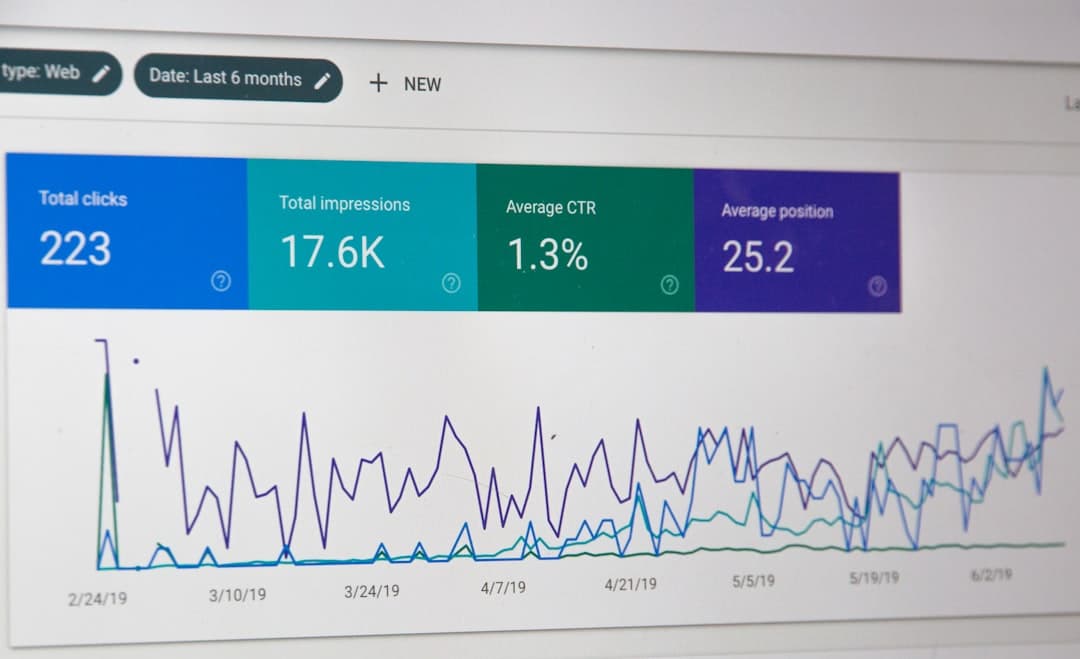
The baseline records organic sessions, revenue by channel, conversion rate, average order value, top landing pages, best selling products, collection performance, indexed URLs, backlinks, rankings, crawl errors, redirects, and site speed. Analytics and advertising platforms should be annotated around the launch date so that post launch changes can be distinguished from seasonality or campaign effects.
The technical inventory should also include every integration that touches the customer journey. Payment services, search, reviews, loyalty, subscriptions, returns, email capture, fulfillment, customer support, feeds, pixels, consent tools, and ERP or warehouse connections belong on the same map as the theme.
Next, classify what is being moved
Not all content deserves identical treatment. Products, collections, editorial pages, customer accounts, orders, redirects, and tracking configurations have different migration risks. A useful classification separates essential records, valuable but transformable records, obsolete material, and unknown dependencies.
The unknown category deserves particular attention. A code snippet with no current owner may be connected to an advertising audience or a post purchase workflow. A hidden URL may still receive traffic from an old campaign. Historical data may not need to move into the new storefront, but it may need to remain accessible for customer service, reporting, or compliance.
Then, create the target architecture
The new information architecture should be designed around customer intent and merchandising logic, not around the limitations of the old platform. Collection taxonomy, filters, navigation, product templates, content types, metadata, and internal linking should be defined before large scale content entry begins.
For a design led agency, this stage is where art and technology meet most productively. A distinctive visual system is valuable, but it must be translated into reusable components, responsive states, performance budgets, and manageable content controls. The design becomes a system rather than a collection of impressive exceptions.

The Cutover Era: How to Launch Without Creating a Blind Spot
Launch is often described as a single event, although the commercial risk is distributed across many small checks. A safer cutover has a rehearsed runbook, named owners, a freeze period, rollback criteria, and an agreed definition of success.
The final pre launch pass should verify DNS and domain settings, SSL, payment methods, tax behavior, shipping rules, inventory synchronization, discount codes, customer account flows, transactional emails, analytics events, consent behavior, search indexing controls, canonical tags, XML sitemaps, robots directives, and every high value redirect.
Testing should use real scenarios rather than only generic quality assurance. A visitor should be able to arrive through an old organic URL, find the correct product, add an item, apply a valid promotion, select shipping, complete payment, receive confirmation, and see the order appear in operational systems. A returning customer should be able to authenticate. A marketer should be able to measure the purchase. A warehouse should be able to fulfill it.
A staged launch can reduce the cost of uncertainty, but it is not always possible for every store. When a single cutover is required, the advantage comes from rehearsal. The migration should be run against a recent data copy, with the import, redirect deployment, integration checks, and reporting validation timed in sequence. The launch window then becomes an execution of a known process rather than an improvised technical ceremony.
The First Weeks After: Reading the New Store Against the Old Record
The first hours after launch should be used for verification, not celebration. Status codes, redirect behavior, checkout transactions, product availability, tracking events, error logs, crawl access, and revenue should be checked continuously. Search Console should be monitored for indexing changes, coverage issues, and unexpected URL patterns. Paid campaign destinations and feed approvals require their own review because a technically successful storefront can still interrupt acquisition.
The first week should compare traffic and revenue by landing page, device, geography, product, channel, and customer type. A modest overall decline can conceal a severe problem in one collection or campaign. Conversely, an initial change in rankings may reflect normal processing rather than a permanent loss, which is why diagnosis should rely on trends and page level evidence instead of a single daily reading.
The next several weeks are for correction and learning. Redirect gaps can be fixed, slow templates can be simplified, search queries can reveal missing content, and customer service questions can expose confusing product or account flows. This feedback is not evidence that the migration failed. It is evidence that a new operating system has begun to reveal behavior the old one obscured.
What the Record Leaves Behind
The history of ecommerce migrations shows that revenue loss rarely arrives as one dramatic technical error. It accumulates through neglected relationships: a URL no longer reaches its successor, a product variant loses its information, a purchase event stops firing, an app changes discount logic, or a mobile customer meets a slower and less comprehensible path to checkout.
The durable method is therefore both historical and practical. Preserve the signals that earned attention, preserve the functions that earn trust, and replace the constraints that no longer serve the business. Shopify Plus can provide the platform for that change, but the outcome depends on the quality of the map drawn before the move.
For brands planning a Shopify Plus migration, the implication is direct: treat the project as a commercial continuity programme with a design layer, not as a theme rebuild with a launch date. Explore Shopify Plus options and support to plan the move. Define the baseline, map the URLs, test the revenue path, rehearse the cutover, and keep the first weeks under observation. The past is not baggage to be discarded. It is the evidence that makes the next version safer to build.